
Uncategorized

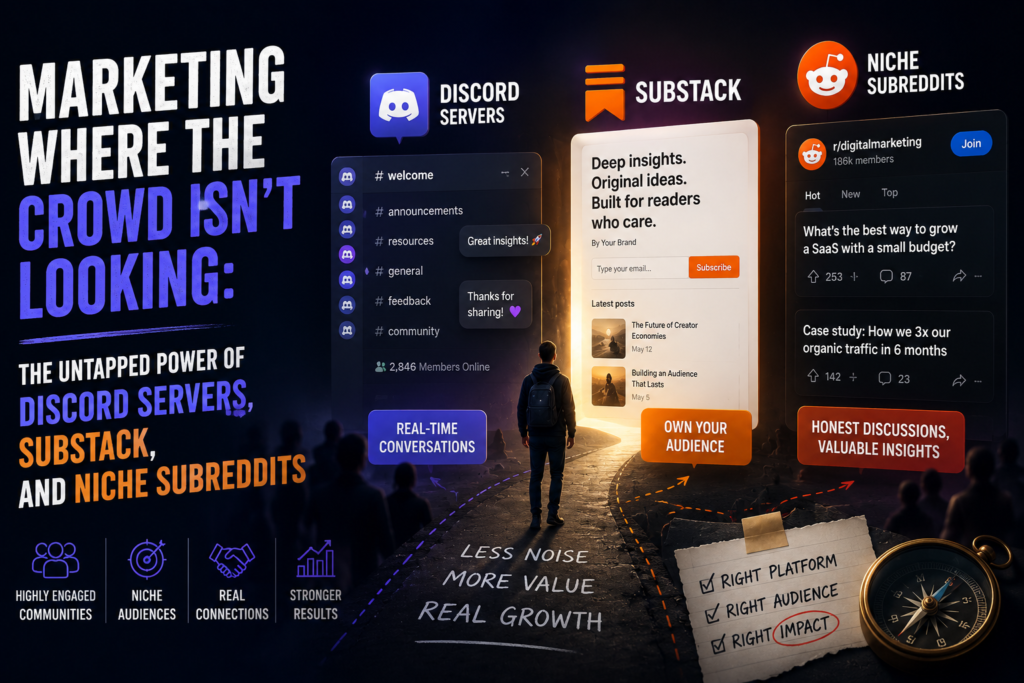
Marketing Where the Crowd Isn’t Looking: The Untapped Power of Discord, Substack, and Niche Subreddits

The Marketing Platforms Hiding in Plain Sight Digital marketing often revolves around familiar platforms such as Instagram, Facebook, YouTube, Google, and LinkedIn. These channels attract enormous audiences, which makes them appealing to businesses of every size. However, their popularity also creates intense competition. Brands constantly compete for attention, and users increasingly encounter similar advertisements, repetitive content, and promotional messages Consequently, marketers should look beyond the obvious platforms. Substack, Discord servers, and specialised subreddits offer an alternative type of possibility. Although these areas might not get as much attention from mainstream marketers, they are home to very specialised populations. Businesses can reach those who are already interested in a certain topic rather than reaching everyone. As a result, these platforms may offer marketers relevant attention, which is becoming more and more valuable. Why Bigger Opportunities Can Be Created by Smaller Audiences Reaching as many people as possible is not necessarily necessary for marketing success. Actually, compared to a large general audience, a smaller audience with a keen interest in a particular subject can frequently generate greater meaningful involvement. For instance, a camera accessory company would find it more beneficial to reach 5,000 people who actively discuss photography rather than 100,000 people who have no particular interest in photography. Additionally, rather than encouraging passive consumption, specialised communities promote dialogue. Members discuss issues in-depth, offer product recommendations, ask questions, and share their experiences. Marketers may learn a lot about consumer expectations from these discussions. As a result, companies may enhance their goods, provide more pertinent content, and craft marketing messages that accurately represent the needs of their target audience. Discord: From Gaming Communities to Marketing Communities Although Discord first became quite popular among gamers, the platform has grown to be used for much more than just gaming.Discord is being used by users to create communities around a wide range of interests, including technology, education, programming, content creation, entrepreneurship, music, design, and finance. Instead than just browsing through an algorithm-driven feed, its server-based structure enables constant communication between users. For marketers, this creates a unique opportunity. Instead of publishing a post and waiting for an algorithm to distribute it, brands can participate directly in conversations. However, marketers must approach Discord carefully. Communities usually have their own rules, culture, and expectations. Therefore, businesses should contribute useful information, answer questions, and participate naturally before attempting any form of promotion. How Companies Can Promote on Discord Without Turning Into Spam Treating every Discord server like a billboard for advertising is the greatest error a marketer can make. Excessive self-promotion can harm a brand’s trust, and users can easily spot promotional behaviour. Instead, marketers ought to concentrate on contributing significantly to the communities they join. A video-editing software provider, for example, might engage in filmmaking and editing communities by responding to technical enquiries, offering editing advice, and talking about market trends. In a similar vein, an expert in digital marketing might offer guidance on content production, SEO, and social media campaigns. Regular involvement can eventually foster familiarity and trust. As a result, community members are more likely to pay attention when the brand eventually launches a pertinent product or service. Substack: Building an Audience You Can Own While social platforms depend heavily on algorithms, Substack offers a more direct relationship between creators and their audiences. The platform allows individuals and businesses to publish newsletters, essays, analysis, commentary, and educational content. Readers can subscribe and receive new publications directly, creating a stronger connection than a simple social-media follow. Moreover, Substack provides an excellent environment for authority-based marketing. A professional does not need millions of followers to become influential. Instead, they can build a focused publication around a specific topic. A digital marketer, for example, could create a newsletter covering advertising strategies, emerging social-media trends, content marketing, consumer behavior, and practical campaign analysis. How Companies Can Promote on Discord Without Turning Into Spam Treating every Discord server like a billboard for advertising is the greatest error a marketer can make.Excessive self-promotion can harm a brand’s trust, and users can easily spot promotional behaviour. Instead, marketers ought to concentrate on contributing significantly to the communities they join. A video-editing software provider, for example, might engage in filmmaking and editing communities by responding to technical enquiries, offering editing advice, and talking about market trends. In a similar vein, an expert in digital marketing might offer guidance on content production, SEO, and social media campaigns. Regular involvement can eventually foster familiarity and trust. As a result, community members are more likely to pay attention when the brand eventually launches a pertinent product or service. Niche Subreddits: Marketing Through Real Conversations Reddit contains thousands of communities dedicated to specific interests, professions, hobbies, and problems. These communities, known as subreddits, often contain highly detailed discussions. Users frequently ask questions, compare products, describe their experiences, and request recommendations. This environment provides marketers with an extraordinary source of customer insight. Instead of guessing what customers want, businesses can observe what people are actually discussing. They can identify common frustrations, frequently asked questions, product complaints, and emerging interests. Consequently, Reddit can function as both a marketing channel and an informal market-research platform. Why Reddit Requires a Different Marketing Mindset Reddit users generally value authenticity and transparency. Therefore, when marketers visit a community without knowing its culture, traditional advertising methods may not work well. Repeatedly publishing promotional content may elicit unfavourable responses and potentially harm the brand’s reputation. Instead, marketers should contribute before they promote. They are able to respond to enquiries, offer helpful resources, clarify technical ideas, and take part in conversations.Marketers can responsibly bring up a product that actually addresses a need while being open about their relationship to the product. Manipulating the community should not be the goal. Instead, it should be to become a valuable participant. The success or failure of a Reddit strategy can be determined by this distinction. Listening Can Be More Valuable Than Advertising The ability to listen is one of these platforms’ most potent benefits. The first step in traditional
Uncategorized

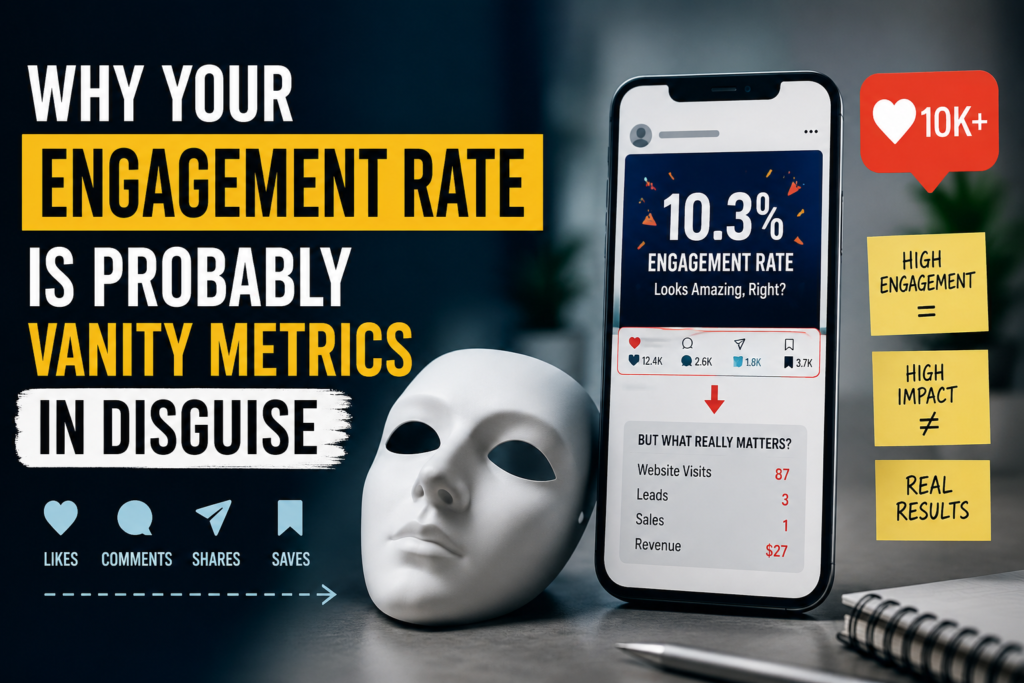
Why your “engagement rate” is probably vanity metrics in disguise

The Engagement Number Everyone Loves Engagement rate has become one of the most frequently reported numbers in digital marketing. Marketers proudly present likes, comments, shares, saves, and other interactions as evidence that a campaign is successful. At first glance, this seems reasonable. After all, if thousands of people interact with a post, the content must be performing well. However, engagement can sometimes create an illusion of success. A post may receive thousands of likes while generating almost no website visits, leads, sales, or meaningful customer relationships. Therefore, marketers should stop treating engagement as an automatic indicator of business performance. Engagement can be useful, but its value depends entirely on what those interactions actually accomplish. What Are Vanity Metrics? Vanity metrics are measurements that appear impressive but offer little information about whether a company is meeting its true goals. They often produce attractive numbers that are easy to display in presentations and reports. However, they may not explain whether marketing activity is contributing to revenue, customer acquisition, retention, or other meaningful outcomes. Engagement rate can become a vanity metric when marketers measure interactions without understanding their business impact. For example, a campaign might generate a 10% engagement rate, but that number alone does not tell us whether customers purchased the product. Similarly, gaining thousands of followers may look impressive, but followers have limited business value if they never become customers or advocates. A Like Does Not Equal a Customer A like requires very little commitment.In a matter of seconds, users can continue scrolling by tapping a button. Likes rarely give enough information to identify commercial intent, even though they can show that someone saw or liked a piece of content. Consider a brand that publishes an entertaining video. The video receives 200,000 views and 20,000 likes. The numbers look impressive.However, if only 50 people visit the website and two people make a purchase, the campaign may not have achieved its primary business objective. Consequently, marketers should distinguish between attention and action. While attention is important, firms ultimately need to take significant steps that lead to expansion. Comments Can Be Misleading Too Because they take more work, comments frequently seem more valuable than likes. However, positive marketing performance is not always indicated by comments. People who disagree with a contentious topic may leave thousands of comments. A funny post might generate many responses without generating any revenue. Therefore, instead of just counting comments, marketers should look at their quality.Are people asking about the product? Are potential customers requesting pricing information? Are existing customers sharing positive experiences? Are users recommending the brand to others? Compared to just reporting the quantity of comments, these questions yield far more valuable information. The Problem With Chasing Shares Because people actively share material with their own networks, shares are frequently seen as one of the most powerful engagement signals.Shares can still be deceptive, though, if marketers don’t link them to corporate goals.Shares are often considered one of the strongest engagement signals because users actively distribute content to their own networks. However, shares can still become misleading when marketers fail to connect them with business objectives. A humorous meme, for instance, could be shared thousands of times because others find it amusing. This does not imply that the audience is aware of or plans to buy the company’s product. On the other hand, a less engaging instructional piece may result in fewer shares but a number of highly qualified leads. As a result, marketers shouldn’t presume that the most popular content is also the most profitable. Engagement Rate Can Hide the Real Story Typically, interactions in relation to a specific audience or reach measurement are used to compute engagement rate. Although this offers a consistent method for comparing material, the computation by itself does not account for why users interacted. It is possible for two postings to generate entirely different business outcomes with the same engagement rates. While the other draws casual connections from those who will never make a purchase, the former may lead to significant conversations with future buyers. Additionally, platform algorithms, distribution, publishing time, audience size, and content kind can all have an impact on engagement rates. Therefore, rather than presenting the number as a definitive assessment of campaign effectiveness, marketers should interpret it within its larger context. Start With Business Goals, Not Social Metrics The right marketing metric depends on the objective. Reach and qualifying impressions could be helpful if the objective is brand awareness. Marketers should concentrate on qualified leads and conversion rates if the objective is lead creation. Revenue and return on advertising expenditure become considerably more significant if the goal is sales. For instance, a business starting an online course would be more interested in registrations than likes.A local company might be more interested in phone calls, reservations, and in-store visits. In a similar vein, an online retailer might give priority to purchases, average order value, and client lifetime value. As a result, marketers should start with the business goal and work their way back. Determine the measures that show if the goal has been accomplished after first defining what success implies. Move From Engagement to Conversion Conversion metrics make the relationship between marketing efforts and business outcomes more evident. Conversions may include internet purchases, form submissions, newsletter subscriptions, app downloads, consultations, reservations, or enquiries, depending on the campaign. This does not mean engagement should be ignored. Instead, engagement should function as a supporting metric. A marketer can assess if consumers engaged with the information and then ascertain whether those interactions ultimately resulted in significant actions. A campaign might, for example, result in 5,000 interactions, 500 website views, 50 leads, and 10 customers. Saying, “The campaign achieved 5,000 engagements,” is not nearly as helpful as this whole experience. Measure the Quality of Your Audience Audience quality often matters more than audience size.If a company’s audience does not align with its target market, it may have a sizable following but still struggle to make sales. As a result, marketers ought to

Uncategorized

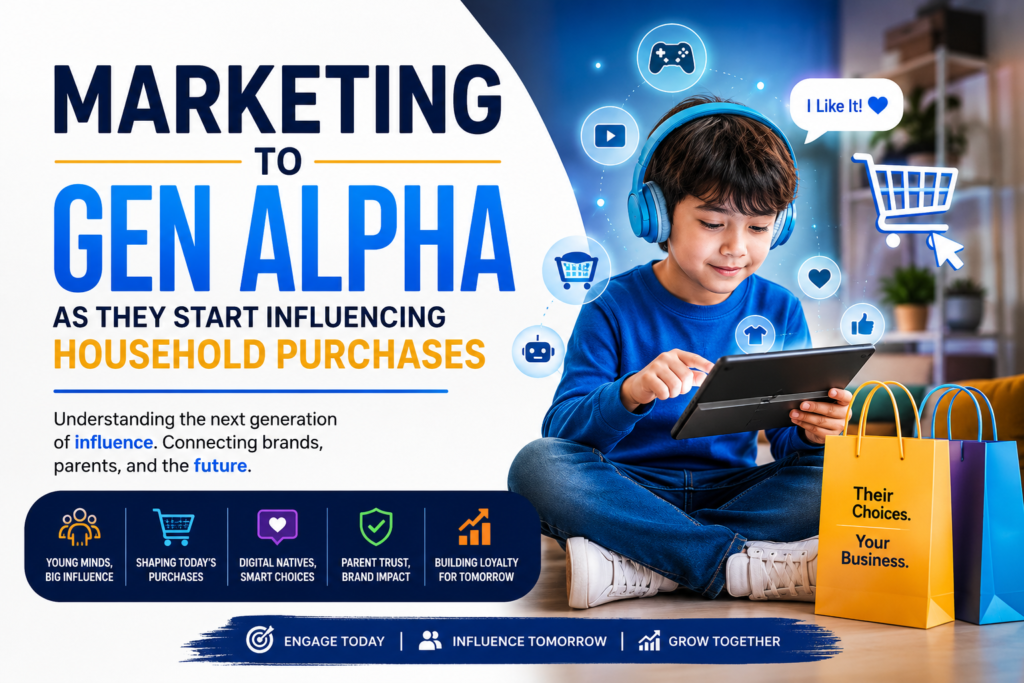
Marketing to Gen Alpha as they start influencing household purchases

The Youngest Generation with a Growing Voice: Meet Gen Alpha Generation Alpha represents children born from the early 2010s onward. Although many members of this generation are still too young to make independent purchasing decisions, their influence within households is already becoming increasingly noticeable. They have grown up surrounded by smartphones, streaming platforms, social media, artificial intelligence, gaming, and digital entertainment. Consequently, their expectations and preferences can influence what parents notice, research, and eventually purchase. Unlike previous generations, Gen Alpha experiences brands through highly interactive digital environments. They do not simply watch advertisements; instead, they discover products through videos, games, influencers, online communities, and recommendations. Therefore, marketers need to understand that Gen Alpha can influence household purchases even when parents remain the final decision-makers. From “I Want This” to “Let’s Buy This”: The Rise of Young Influencers Family purchases have always been impacted by children, especially when it comes to toys, snacks, entertainment, clothes, and technology. However, digital connectivity has significantly expanded their influence. Today, children can discover products independently, compare options, recognize brands, and communicate their preferences to parents within seconds. For example, a child may discover a particular gaming accessory through a YouTube video and then ask a parent to purchase it. Similarly, a Gen Alpha child might influence a family’s choice of restaurant after seeing an appealing food video online. As a result, marketers should recognize the difference between purchasing authority and purchasing influence. Gen Alpha may not control the household budget, but their preferences can strongly affect the consideration stage. Digital Natives Who Think Beyond Traditional Advertising Gen Alpha has developed in an environment where digital content is part of everyday life. Traditional advertisements may therefore struggle to capture their attention unless brands present information in a more engaging format. Short-form videos, interactive content, gaming experiences, creator collaborations, and visual storytelling can make brands more memorable. Furthermore, Gen Alpha expects brands to provide experiences rather than simply deliver promotional messages. A static advertisement may communicate product information, whereas an interactive campaign can encourage exploration and participation. Consequently, marketers should create digital experiences that feel natural within the platforms where younger audiences already spend their time. The Power of Parents in Gen Alpha Marketing Even though Gen Alpha can have an impact on household purchasing, parents are still essential in approving and completing a lot of transactions. Therefore, successful marketing strategies should address both audiences rather than focusing exclusively on children. Marketers should communicate value, quality, safety, convenience, and affordability to parents while making the product visually appealing and relevant to Gen Alpha. For instance, a technology product can emphasize entertainment and creativity for children while highlighting durability, parental controls, and value for money to parents. This dual-audience approach allows brands to connect emotionally with children without ignoring the practical concerns of adults. Gaming Is More Than Entertainment Gaming has become an important part of Gen Alpha’s digital culture. Games provide opportunities for social interaction, creativity, competition, and discovery. Consequently, gaming environments can become powerful spaces for brand awareness and engagement. Brands can explore opportunities such as branded experiences, virtual items, interactive challenges, and partnerships with appropriate gaming creators. However, marketers must approach these opportunities responsibly. Young audiences require additional consideration regarding advertising transparency, privacy, data collection, and commercial pressure. A successful strategy should build familiarity and positive associations without manipulating children into demanding products. Creators, Influencers, and the New Trust Economy Gen Alpha increasingly encounters products through creators and online personalities. A creator demonstrating a product can feel more relatable than a traditional advertisement because the content often appears within an entertainment environment. Consequently, influencer marketing can play an important role in introducing brands to younger audiences and their families. However, marketers should prioritize authenticity and responsible communication. The objective should not simply be to make children want a product. Instead, brands should work with creators who can explain products honestly and communicate sponsored relationships clearly. Moreover, campaigns should align with the values and expectations of both children and parents. Creators, Influencers, and the New Trust Economy Gen Alpha is more frequently exposed to products through online celebrities and creators. Because the information frequently appears in an entertaining setting, a creator showcasing a product may feel more relatable than a typical advertising. Influencer marketing can therefore be crucial in introducing businesses to younger consumers. However, marketers should prioritize authenticity and responsible communication. Making kids want a product shouldn’t be the only goal. Instead, companies should collaborate with people who are able to openly identify sponsored partnerships and provide honest product explanations. Campaigns should also be in line with parents’ and kids’ expectations and values. Personalization Without Losing Trust Gen Alpha is used creating customised online experiences. Online services often modify experiences based on user behaviour, gaming platforms propose material, and streaming platforms suggest videos. Younger consumers may therefore naturally anticipate that brands will offer tailored and relevant experiences. Nevertheless, personalization must coexist with privacy and responsibility. Companies should respect the particular protections that relate to minors and refrain from collecting excessive amounts of data. Marketers can increase relevance by utilising contextual techniques, creative preferences, wide interests, and family-oriented experiences rather than excessively depending on personal data. Brands may achieve personalisation while upholding consumer trust in this way. Gen Alpha Does Not Want Advertising—They Want Experiences The information that consumers truly want to watch is frequently interrupted by traditional commercials. However, entertainment, games, creators, interactive experiences, and personalised suggestions are the ways that younger consumers are coming into contact with companies. As a result, the line separating advertising and content is becoming less clear. Therefore, instead of just interfering with the experience, brands should think about how they might become a part of it.A food company might come up with a fun family challenge. An educational company could develop interactive learning content. A tech company might produce a helpful online experience. Audiences are more likely to remember a brand when it offers real value. From Trends to Long-Term Brand Relationships Gen Alpha moves through digital trends

Scroll to Top